Why Most Budgets Fail Before the First Number Is Typed
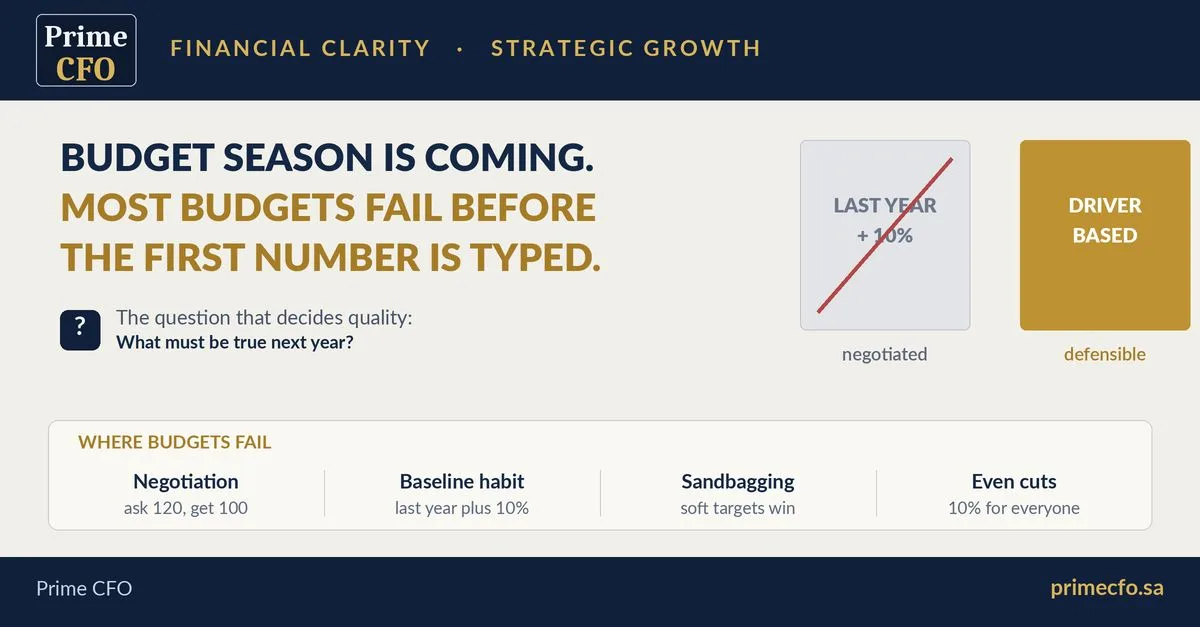
Budget season is coming. Most budgets will fail before the first number is typed.
Not because the models are wrong. Because of what happens in the room before the model opens.
The failures are predictable: The budget becomes a negotiation, not a plan. Departments ask for 120 to receive 100. Leadership cuts 20 to feel disciplined. The final number reflects bargaining skill, not business reality.
Last year becomes the baseline. "Last year plus 10%" feels safe, but it silently re-approves every inefficiency in the base. Nobody asks: if we started this department today, from zero, is this what it would cost?
Sandbagging gets rewarded. The manager who beats a soft target is celebrated. The one who misses an honest, ambitious one is questioned. Three years of this and the whole organization learns to plan defensively.
Cuts arrive evenly, which means thoughtlessly. "Everyone reduces 10%" sounds fair and is the opposite. It punishes the lean team that budgeted honestly and rewards the padded one.
The fix isn't a better template. It's a different question at the start: not "what did we spend last year?" but "what must be true next year, and what does each riyal contribute to making it true?"
A budget built on drivers can be defended. A budget built on negotiation can only be traded.
The quality of a budget is decided in the first conversation, not in the final spreadsheet.
Turning these ideas into a disciplined monthly practice is core to the work of a fractional CFO. To see where your company stands today, start with the instant financial diagnosis, free during our founding period.
Read next
Do you know where your company stands financially today?
Upload your last two years of financial statements and get a financial health score and sector comparison in minutes, free during our founding period. If you need executive financial leadership, we are here.
Try the free financial diagnosis