A 45-Page Board Pack with the Decision on Page 38: How to Build Board Reporting
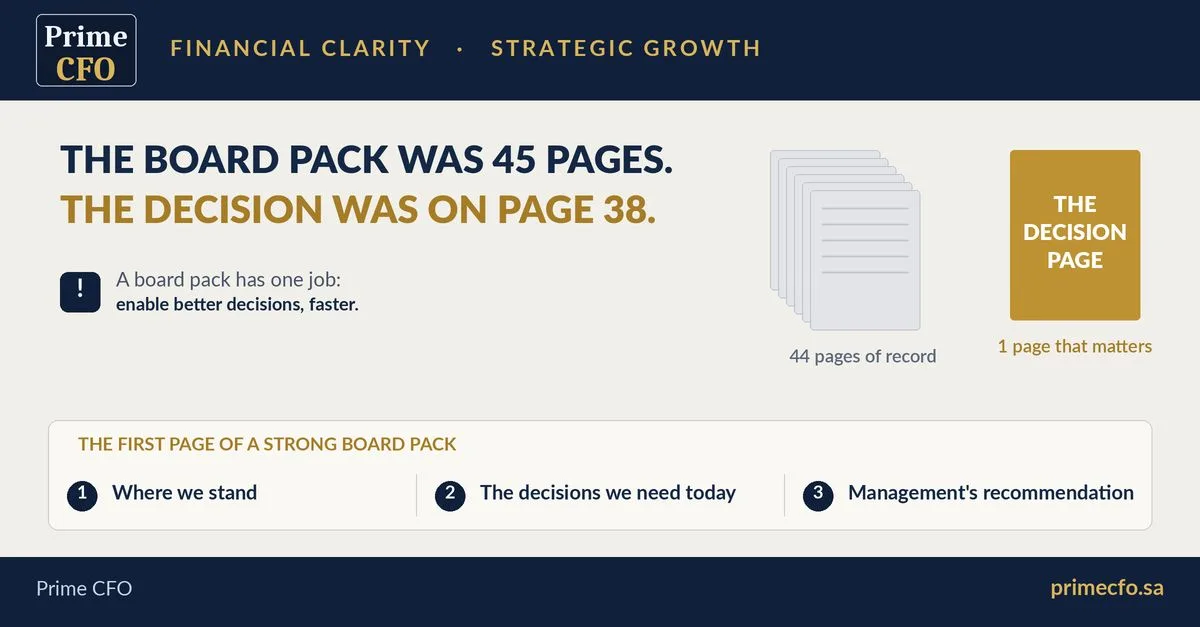
The board pack was 45 pages. The decision was hiding on page 38.
We review a lot of board and management packs. The pattern repeats: more pages, less clarity. Every month someone adds a slide. Nobody removes one. The pack grows, and the discussion shrinks.
A board pack has one job: enable better decisions. Most fail because of these habits:
Reporting everything, prioritizing nothing. Forty charts with no hierarchy means the board decides what matters in the meeting, on the spot, without context. That's the CFO's job, done by the wrong people at the wrong time.
Numbers without narrative. A table shows margin fell 3 points. It doesn't say why, whether it's structural, or what management proposes. The board reads data and leaves without a decision.
History without a forward view. Ten slides on last quarter, one on the next. Boards can't change the past. Every backward-looking page earns its place only by informing a forward-looking choice.
No ask. The strongest packs open with one page: here's where we stand, here are the two decisions we need from you today, here's management's recommendation. Everything after that page is supporting evidence.
The test of a board pack isn't completeness. It's whether the meeting ends with clear decisions, made faster, with more confidence.
If everything is highlighted, nothing is. Report for the decision, not for the record.
Turning these ideas into a disciplined monthly practice is core to the work of a fractional CFO. To see where your company stands today, start with the instant financial diagnosis, free during our founding period.
Read next
Do you know where your company stands financially today?
Upload your last two years of financial statements and get a financial health score and sector comparison in minutes, free during our founding period. If you need executive financial leadership, we are here.
Try the free financial diagnosis