The Difference Wasn't the Forecast. It Was Decision Speed.
Two companies in the same market facing the same shock. One acted in March, the other in June. By year-end, only one still controlled its own strategy. This piece explains how financial planning shifts from a reporting obligation into an operating system for capital allocation.
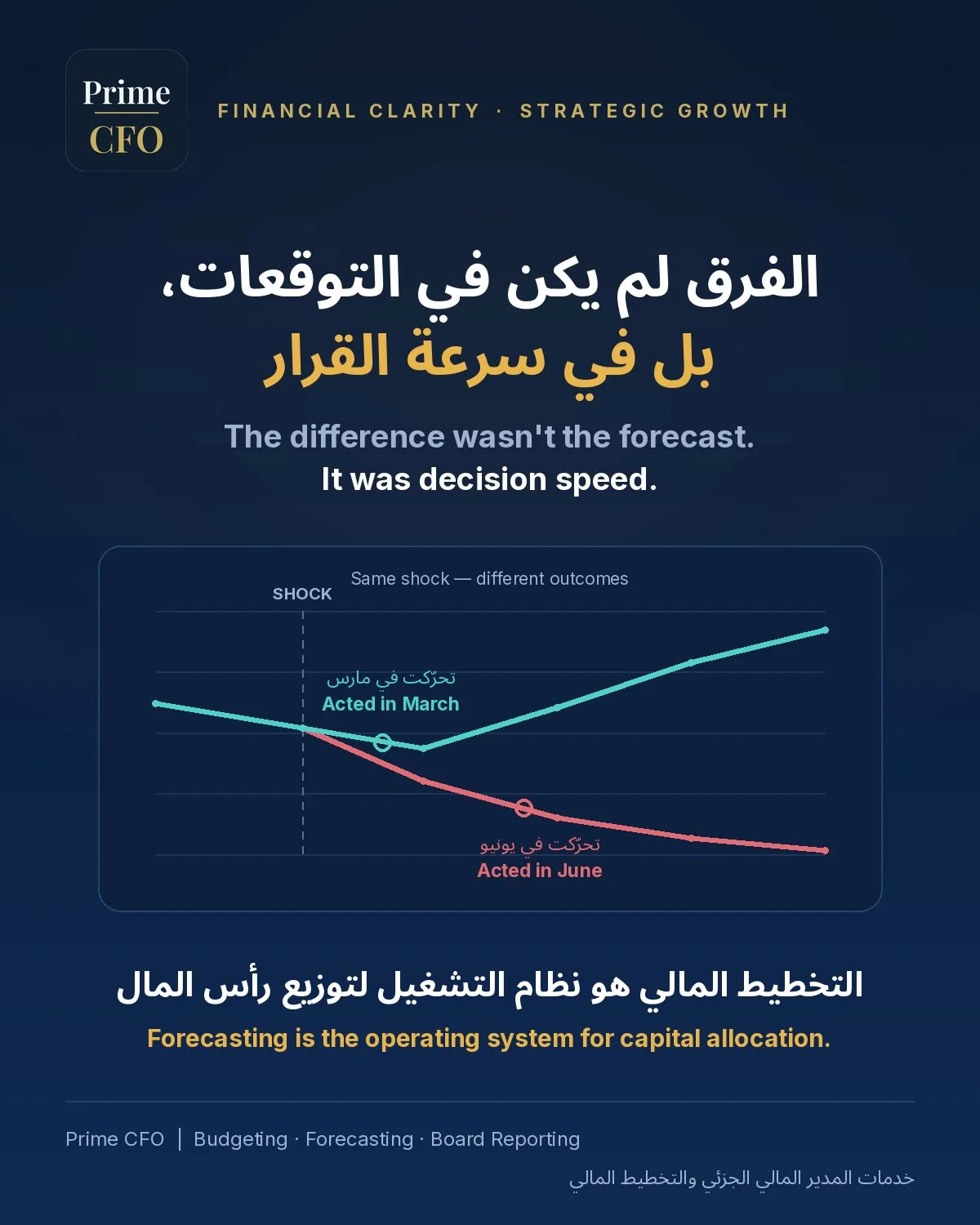
Picture two similar companies in the same sector facing the same shock: a demand contraction or a sudden cost increase. The first reviewed its cost structure in March; the second made the identical decision in June. Same decision, three months apart. Yet by year-end the first has absorbed the shock and returned to growth, while the second is managing a crisis with narrower options.
The first was not more accurate in its forecasting, nor luckier. It was faster in deciding. And decision speed is not a personal trait of the leader; it is a direct output of the information system they operate within.
The question each instrument answers
An annual budget answers one question: are we on plan? That is a legitimate and necessary question for accountability, but it looks toward the recent past and tells you nothing about what to do tomorrow.
A rolling forecast answers the question that matters more for leadership: what is the next move, and can we afford it? That question looks forward, and it turns the finance meeting from a performance review into decision-making.
How this shift changes the way leadership operates
- Capital moves toward what is working now, not toward assumptions set last December. A company that revisits resource allocation monthly discovers early which business line deserves support and which is draining.
- Scenarios are pre-built, so a shock triggers a prepared playbook rather than panic. When "what if revenue drops 15%?" has already been discussed in a calm earlier meeting, executing it becomes a decision rather than a discovery.
- The board debates strategic trade-offs, not variance explanations. That alone raises the level of discussion in the boardroom and frees time previously spent explaining the past.
Three numbers side by side
The practical implementation is simpler than imagined: each month leadership sees three numbers together, the approved plan, the latest forecast, and the gap between them. No complex dashboards or dozens of metrics, just three columns that open the right discussion.
And it is precisely in that gap that strategy is made, because it is the only place where what we committed to meets what we actually expect.
What the gap means in practice
A widening revenue gap? Seen four months early, you have time to address the pipeline and acquisition channels. Seen late, the only remaining option is usually headcount reduction, the harshest decision and the slowest to take effect.
Margins compressing? Repricing is possible before annual contract renewals lock you in. In many companies the pricing window opens once a year, so whoever misses it waits a full twelve months.
Cash tightening? Extending runway happens from a position of choice, not necessity. The difference shows up in the financing terms themselves: a company requesting a facility while stable gets better terms than one requesting it under pressure.
It does not require a bigger finance team
One of the most misunderstood points here is that implementation requires expanding the finance department or buying costly planning systems. In reality it requires two things: treating the forecast as a leadership instrument rather than a reporting obligation, and having someone with executive financial judgment to translate the gap into a decision.
And that second point is the real differentiator in many growth-stage companies: the data exists and reports are produced, but nobody at the decision table owns turning them into an executable move.
Forecasting is not a periodic finance ritual; it is the operating system through which capital allocation decisions are made. The companies that come through downturns are not necessarily those that saw them coming, but those built to move first.
For the conceptual basis of the difference between the two instruments, our piece on budget versus rolling forecast covers it in detail, and for short-term liquidity discipline see the 13-week cash flow forecast. Building this system and leading its monthly meeting is the core of what a Fractional CFO does.
How long does your next financial decision take?
The financial diagnostic reveals the quality of your reporting and how fast it reaches decisions, identifying what prevents your company from moving early.
Request a Financial Diagnostic